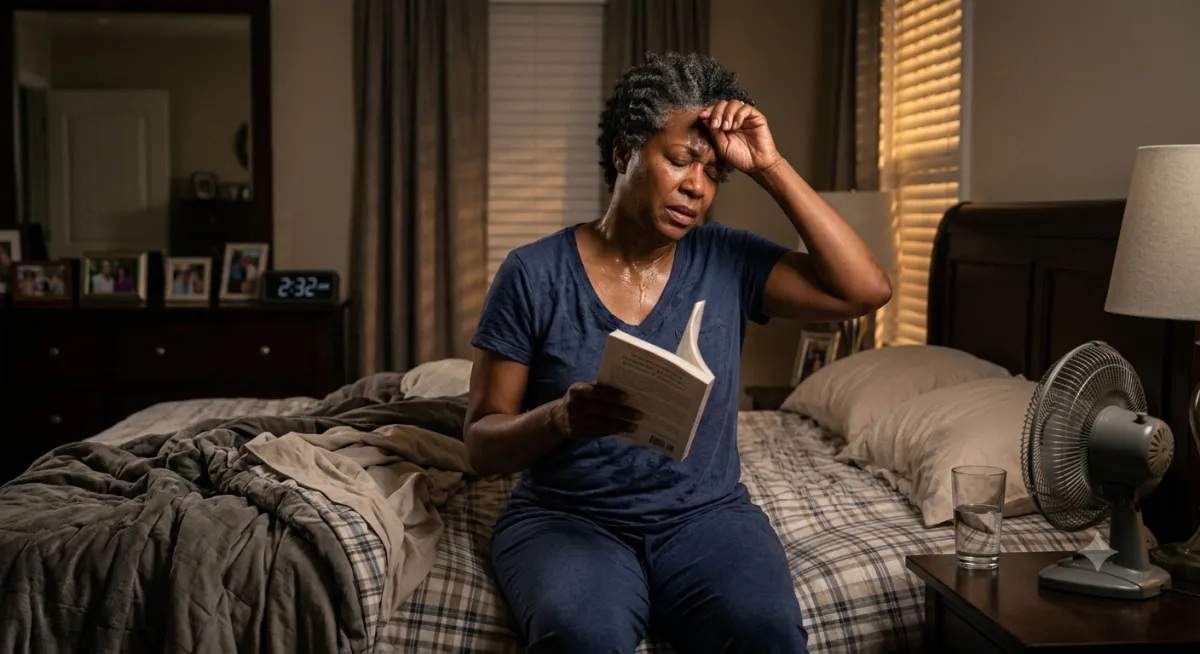
What Causes Nighttime Hot Flashes?
What Causes Nighttime Hot Flashes? Understanding Night Sweats During Menopause
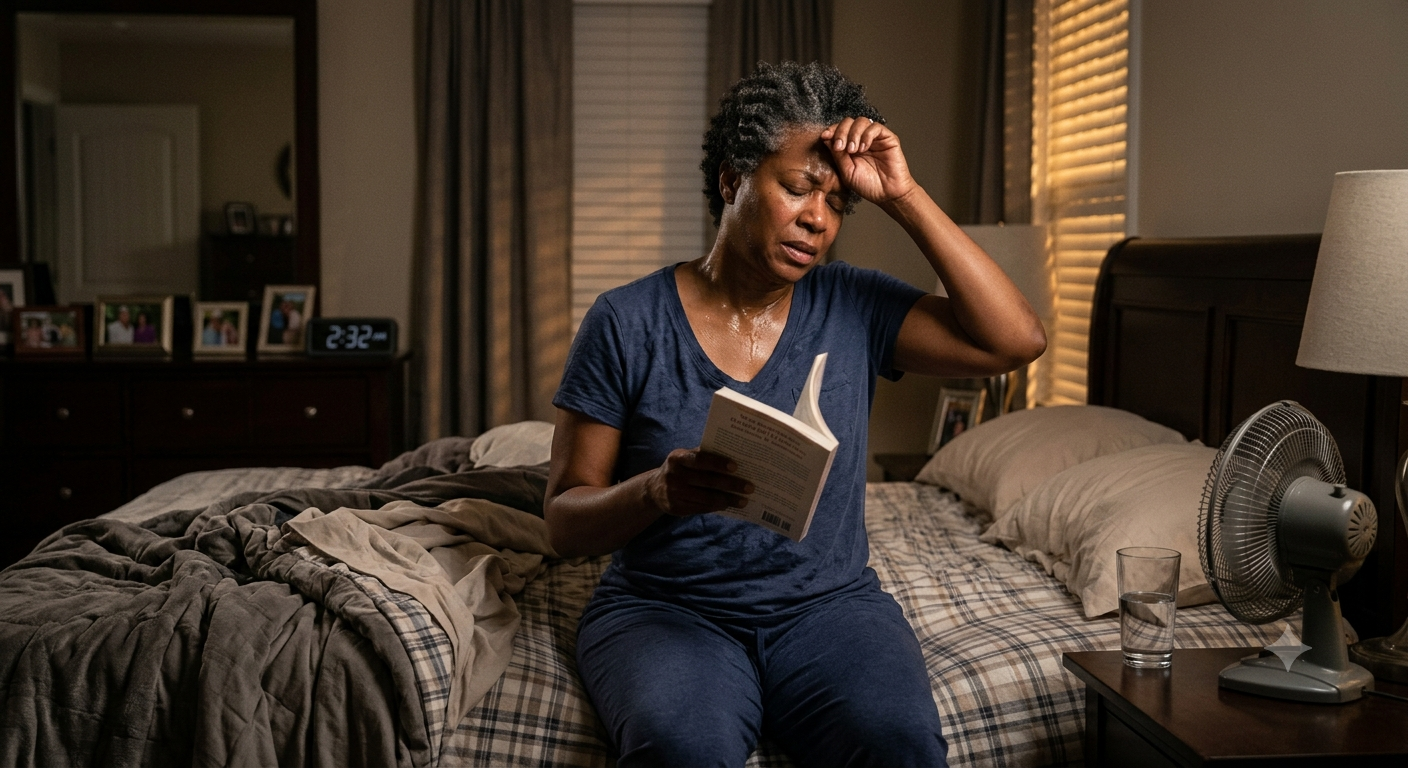
When restful nights become restless ones
Sister, if you've ever fallen asleep comfortably only to wake up drenched in sweat, throwing the blankets off one minute and reaching for them the next... you're not imagining it.
Nighttime hot flashes can leave you exhausted before the day even begins.
Maybe you've wondered:
"Why does this only happen at night?"
"Why can't my body just stay comfortable?"
"Will I ever sleep normally again?"
The good news is this:
Your body isn't working against you. It's responding to changes that are completely normal during menopause.
Understanding why these nighttime hot flashes happen is the first step toward finding relief.
What's happening inside your body during nighttime hot flashes?
1. Falling estrogen changes your body's internal thermostat
One of the biggest reasons hot flashes occur is the decline in estrogen.
Estrogen helps regulate the hypothalamus, the part of your brain responsible for controlling body temperature.
As estrogen levels decrease, your brain becomes much more sensitive to even tiny changes in temperature.
Instead of making small adjustments, your body reacts dramatically by:
widening blood vessels
increasing blood flow
triggering heavy sweating
It's your body's way of trying to cool itself—even when you weren't actually overheated.
2. Your body temperature naturally changes at night
Even without menopause, your body follows a natural daily rhythm.
As bedtime approaches, your core temperature begins to drop to prepare you for sleep.
During menopause, those normal temperature changes can trigger an exaggerated response.
That's why many women notice hot flashes becoming more frequent after they've already fallen asleep.
Sister, it's not that nighttime causes hot flashes.
It's that nighttime makes your body's temperature changes more noticeable.
3. Stress can make hot flashes feel stronger
Your hormones aren't the only thing influencing hot flashes.
Stress activates your nervous system and increases cortisol, your body's primary stress hormone.
Higher stress levels can:
increase the frequency of hot flashes
make them feel more intense
make it harder to fall back asleep afterward
Sometimes it's not just menopause waking you up.
It's menopause and an overwhelmed nervous system working together.
4. Certain habits can trigger nighttime hot flashes
While hormones are the main cause, some lifestyle factors can make symptoms worse.
Common triggers include:
alcohol before bed
spicy evening meals
caffeine late in the day
warm bedrooms
heavy blankets
smoking
Not every woman has the same triggers, which is why paying attention to your own patterns can be so helpful.
Your body often gives you clues—you just have to learn its language.
5. Small changes can make a big difference
Although you can't stop hormonal changes altogether, you can create an environment that helps your body stay more comfortable.
Many women find relief by:
keeping the bedroom cool
wearing lightweight, breathable sleepwear
using moisture-wicking bedding
practicing relaxation before bed
maintaining a consistent sleep schedule
staying hydrated throughout the day
Natural healing isn't about finding one perfect solution.
It's about making small, sustainable choices that support your body every day.
Psalm 4:8 (ERV)
"I can lie down and go to sleep in peace. Lord, only you can keep me safe."
Even on nights when sleep feels interrupted, God remains near. His presence doesn't leave when your rest is restless.
Your body deserves compassion, not criticism
Sister, waking up in the middle of the night can feel discouraging.
But these hot flashes are not a sign that your body is failing.
They're a sign that your body is adapting.
This season calls for curiosity instead of frustration.
Compassion instead of criticism.
Support instead of struggle.
You don't have to fight your body.
You can learn to care for it in new ways.
And through every restless night, remember this:
Your body is changing—but God's faithfulness never does.
If you've been losing sleep because of nighttime hot flashes, I hope this helped you understand what's happening with a little more peace and a lot less fear. The more you understand your body, the more confidently you can care for it. And if you're looking for continued support on your healing journey, I'd love to invite you to take the next step.
If this article encouraged you, come listen and subscribe to the Beautiful Onions Podcast. Together, we'll navigate menopause, healing, and this beautiful season of becoming. Beautiful Onions Podcast
If you're ready for practical, natural guidance through menopause, preorder the Natural Menopause Healing Toolkit. It's filled with tools designed to help you feel informed, supported, and empowered.
Whenever you need trusted resources, encouragement, or a community of women who understand your journey, visit Beautiful Onions.